Rebuilding confidence in community participation in the AI age
- Role
- Design, research & strategy
- Team
- PM & tech lead
- Timeline
- 4 months · 2025
Context
Generative AI drew developers away from Stack Overflow, reducing questions, answers and engagement. At the same time, about 40% of revenue came from licensing community knowledge to AI companies, even as the platform produced less of that content.
I focused on activation: turning passive visitors into active contributors to increase the volume of high-quality questions and answers on the platform.
The problem
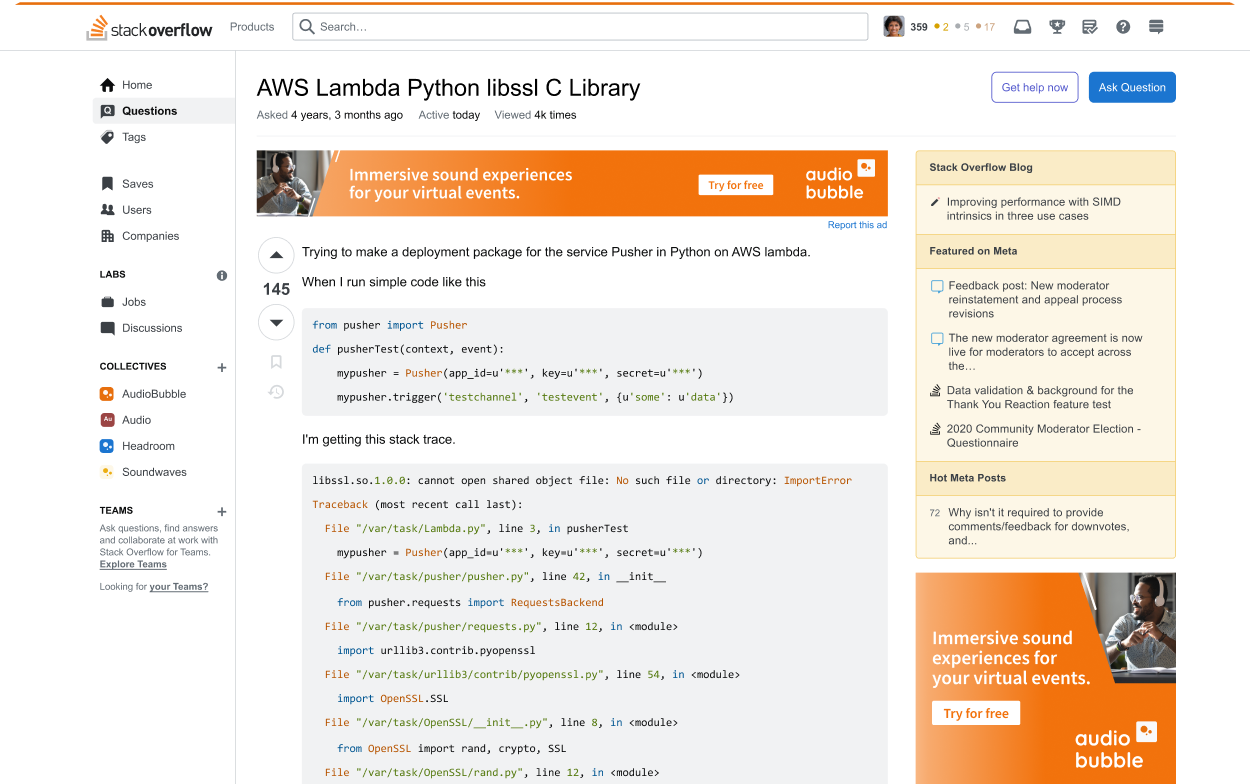
Developers trusted Stack Overflow, but contributing felt intimidating. Strict moderation, high quality standards and the risk of downvotes or deletion meant new users often learned the rules only after making a mistake. As a result, most visitors read without posting.
Impact
- +6%Activation
- +3.9%Retention
- +110Monthly engaged users
What I did
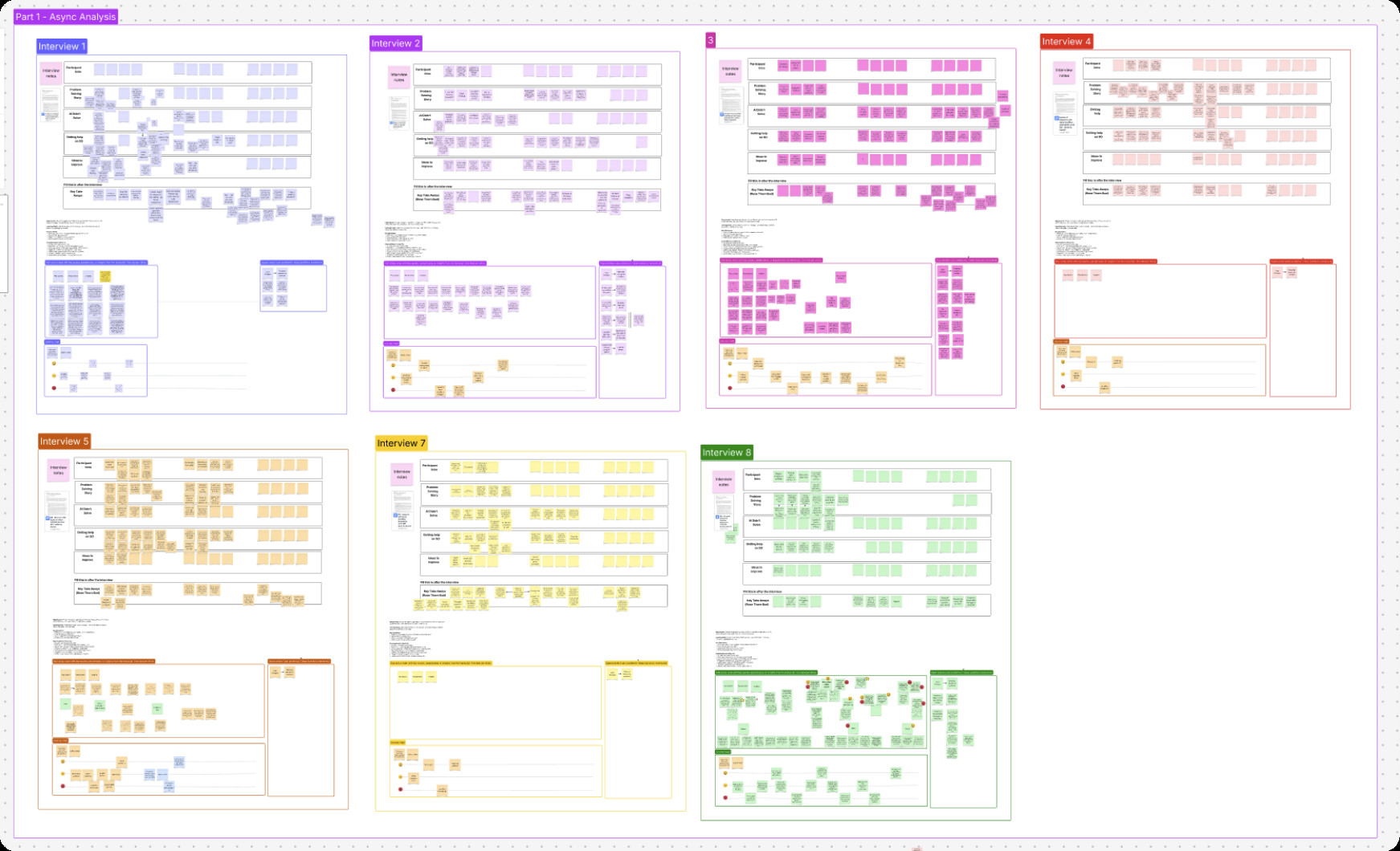
Understanding why developers hesitated to participate
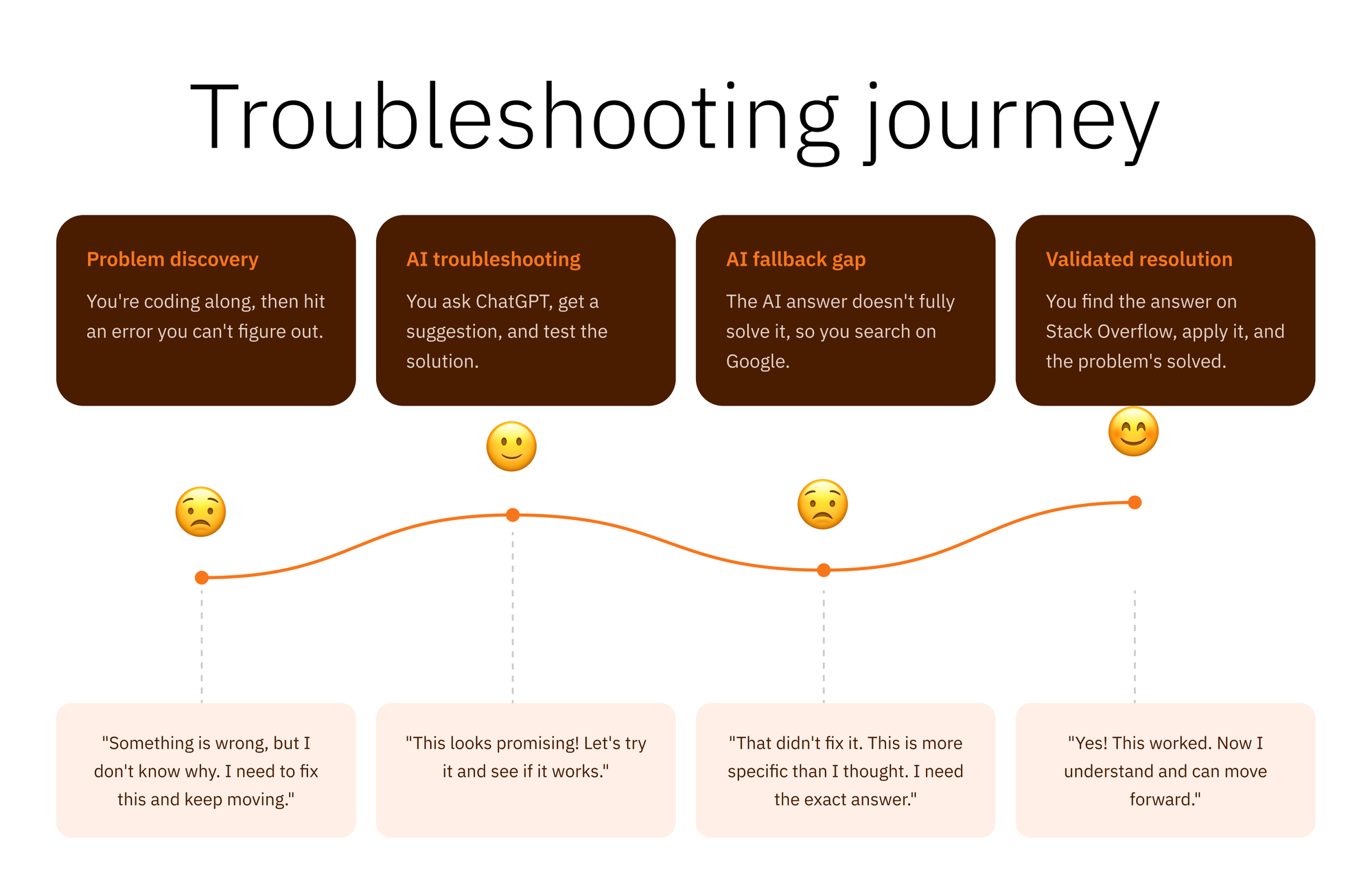
Developers returned to Stack Overflow when AI answers were unreliable, but doubted they would get help quickly.
Testing two ways to rebuild confidence
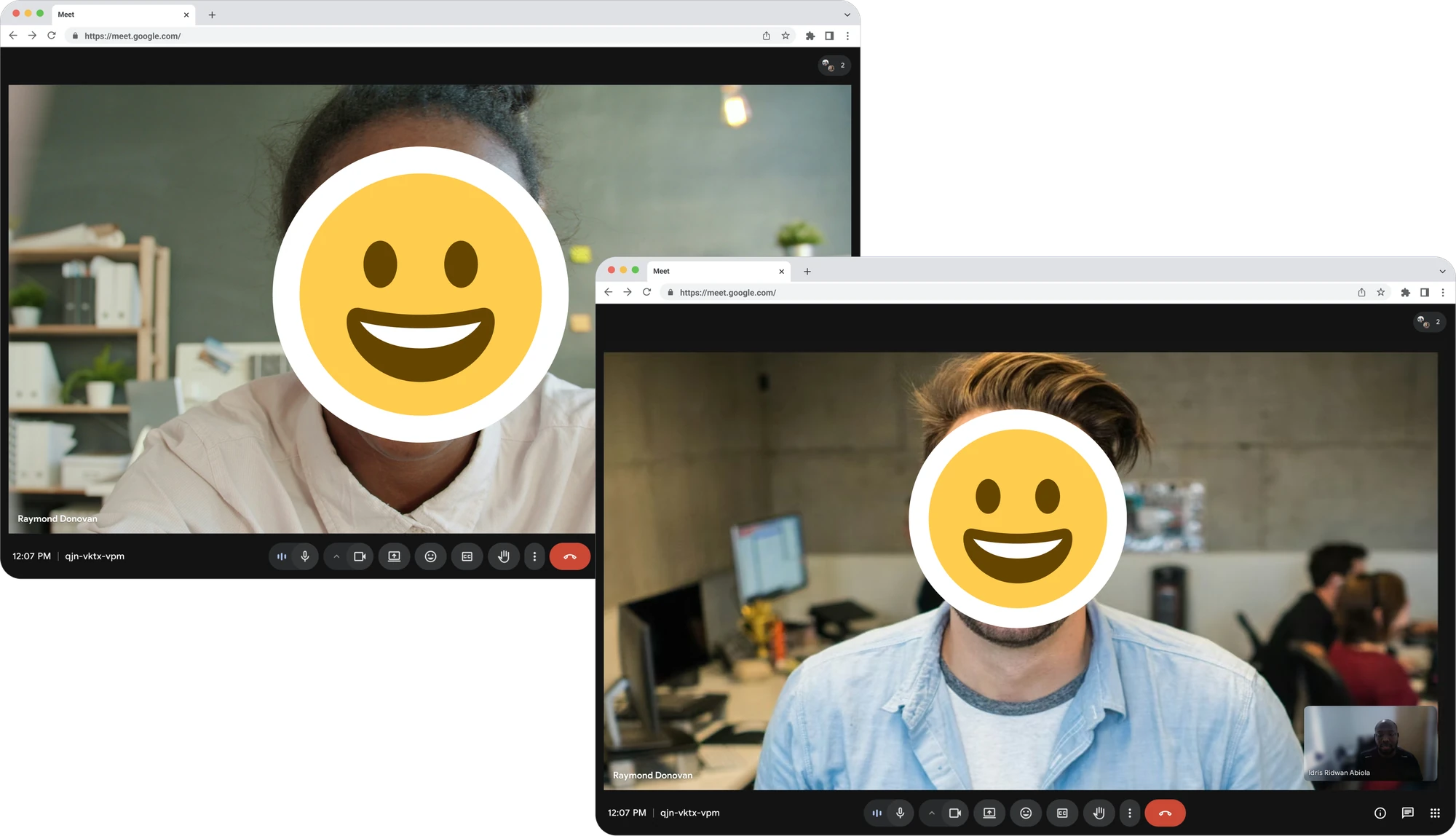
We tested Live 1:1 help and Liveliness using fake-door and A/B tests to explore how the platform could become a more reliable fallback.
Choosing the lower-risk path
The test showed stronger interest from helpers than askers. Among helpers, 9.9% clicked through and 1.7% offered to help. Among askers, 1.8% clicked through and 0.3% requested support.
Based on the results, I argued against building 1:1 help and shipped Liveliness as a low-risk improvement we could monitor in production.
Learning
The best decision I made that quarter was choosing not to ship.