Designing trust signals for humans and AI
- Role
- Design, research & strategy
- Team
- PM & tech lead
- Timeline
- 3 months · 2026
Context
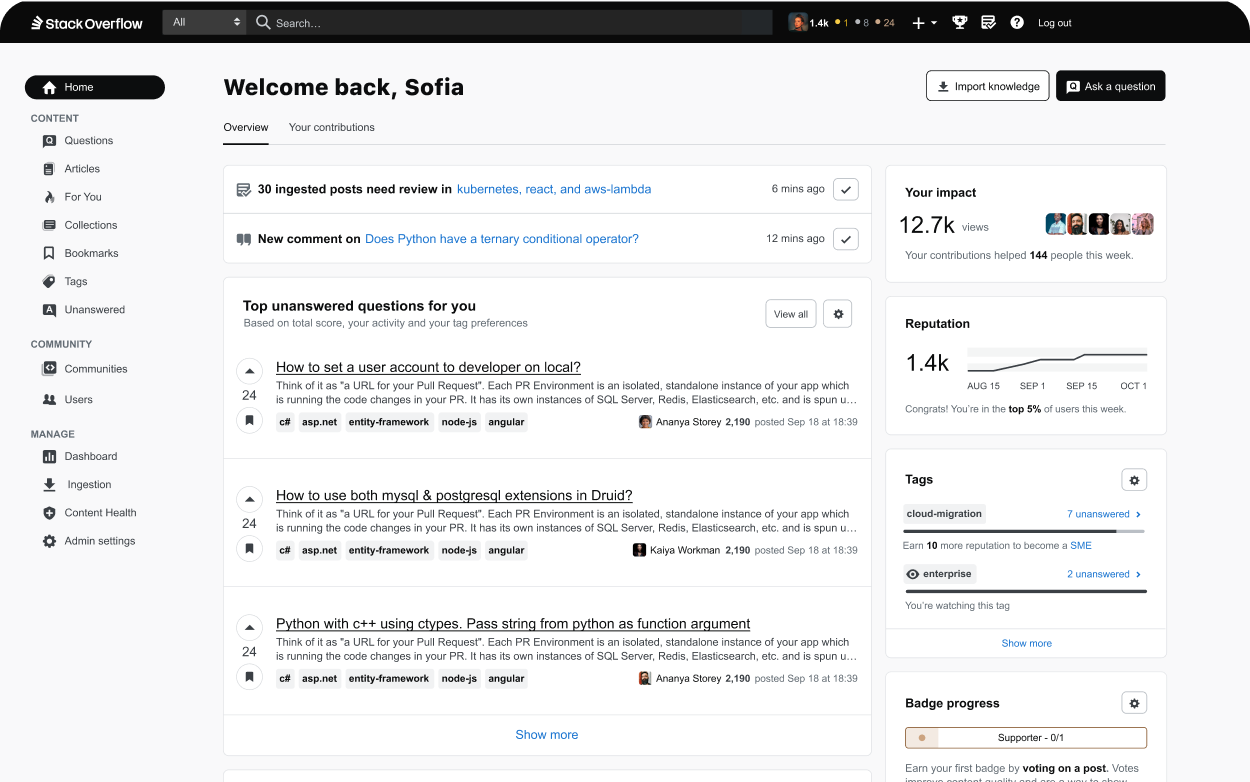
Stack Internal helps companies manage internal knowledge. As the product evolved towards automated knowledge management system, knowledge needed to be accurate, up to date and safe for people and AI to act on. However, manual reviews could not keep pace, with 80% of content unreviewed for over a year.
I led the design, research and strategy for a scoring system that made reviews more efficient and helped people and AI identify knowledge they could trust and safely act on.
The problem
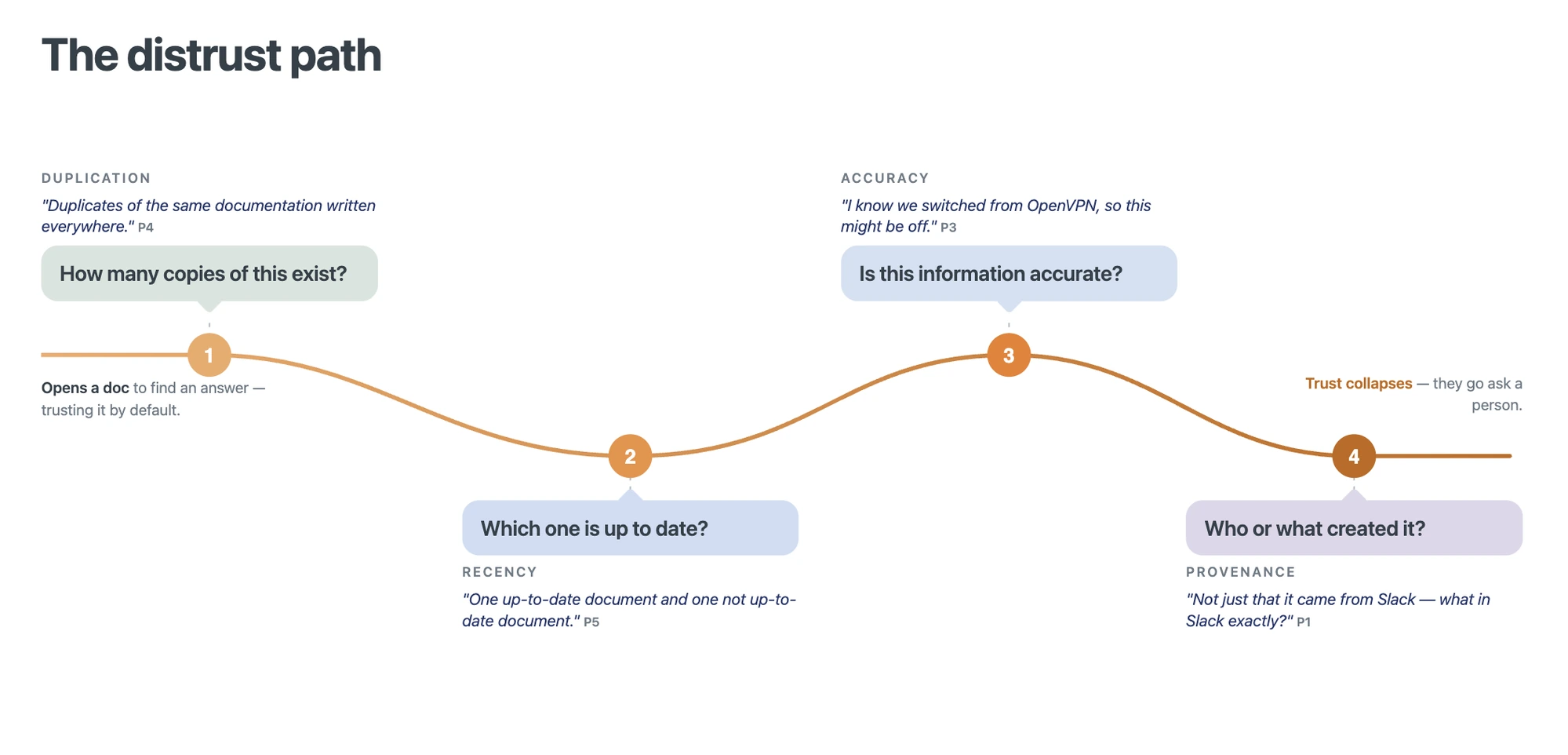
Stack Internal imported knowledge from Confluence, Google Drive, Slack and other sources. Some was useful, while some was outdated, duplicated or conflicted with another source. Content reuse had fallen by 40%, and neither people nor AI could easily tell which knowledge was safe to act on.
Impact
- 86%Est. scoring accuracy
- 10Customers reported efficiency
- 2Enterprise contract renewals
What I did
Understanding what experts needed to trust knowledge
Interviews and concept testing showed that trust depended on content quality, freshness, source credibility and author reputation. Experts valued human content for its depth and lived experience. AI-generated content needed clear evidence and credible sources to earn the same trust.
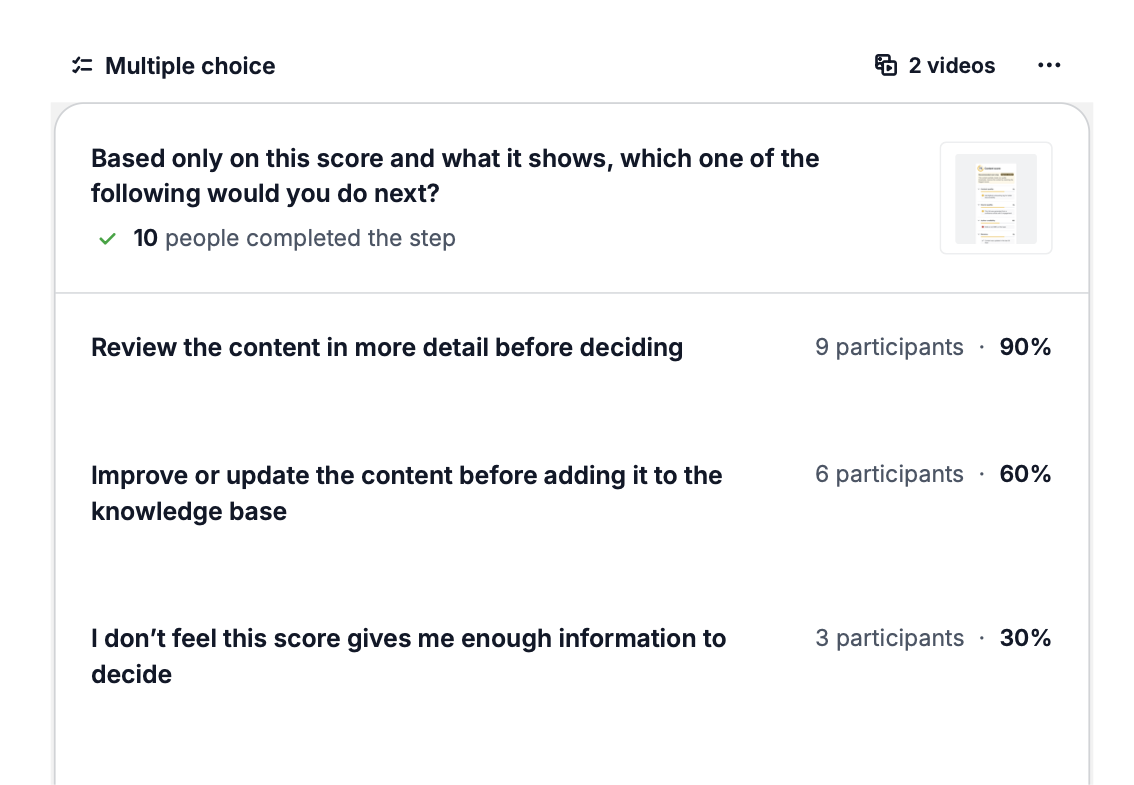
Experts also rejected scores they could not question. They wanted to understand how each judgement was made.
Making every score explainable
Every score had to show how it was generated. I used explainable signals to help experts assess the reasoning, identify uncertainty and prioritise reviews.
Learning
People trusted the score when they could see how it was reached.